With your contribution and my contribution, the people will thrive.
Maori quote (Whitinui, 2013)
In Piera’s kitchen he is serving coffee and waffles to everyone. A four-wheeler stops outside, and a policeman enters. He has been around in the tundra checking up on the hunters since this is the first day of hunting for small game. Two visiting verddes of Piera enter the kitchen. They shake the officer’s hand and greet him as they know him from earlier. They tell us that they have been hunting on the other side of the river today. One of the men is laughing about today’s events. “My pal here and his dog are similarly stressed so it is an adventure to watch them cooperate or compete in the hunting.” He laughs so much that he is not able to talk about his experience. His friend takes over and lets us in on today’s hunting story with a great deal of self-irony: “I have not trained my dog properly. At the time when he took the stand and the ptarmigan raised, I hurried to shoot before he started to run after it. That would have been extremely dangerous to the dog. So, I yelled “NO” and took a shot. Then I threw away the shotgun and started to race him to be the first to get hold of the bird. I took a leap before the dog got it, and I fell into a ditch with the dog on top of me. But I got hold of the bird.” I look at the others around the kitchen. His friend is almost chocking with laughter. “I’m peeing myself” he says. It is hard to stop laughing as the main person himself continues to feed the story with details about the partnerships between his dog and himself and how they have reflected his own life when hunting. “The dog needs a few days up here as well before we calm ourselves together.”, he says.
The police officer says thanks for the coffee, waffles and the story before he heads out. He chuckles as he walks out the door. The others head back to their cabin to get ready for a sauna and dinner. One of the verddes suddenly comes running in front of the window in the nude and jumps in the river. Piera laughs and say: “I wonder what I would have told the authorities if they showed up here right now, I have a doctor taking a bath in the fresh-water inlet of the cabin. My oh my, these guys.” I laugh. “The events are really topping off right now”, I say. “Those two are more of a danger to themselves than the game”, he replies, “and they bring humour and life into this batch of men. These two guys are not here for the hunting as much as for the companionship and good memories. I like that kind of visitors.
8.1 Introduction
Verran (2013) is particularly concerned with encounters between different traditions of knowledge. No easy translation can be done. Only partial connections between tourism and indigenous ways of knowing are possible. Verran (1998) argued that we must practise in a way that make us stay with this troubling difference and discontent that we find as tension between such differences. Listening offers an expanded vision of partiality with respect to our ongoing aim to understand each other’s metaphysical worlds. Even if it scares us, frictions offer, a fruitful setting where we can create new knowledge together (Verran, 2013). This friction can also be found in Sámi tourism between tourists and hosts, as described in chapter 2.2. and between hosts and tourism management. Brattland et al. (2018) argue that being careful, partial participants should be done through practice and collective learning activities. This is something that can be used more extensively in Sámi tourism as well.
In the previous chapters, I drew on an indigenous pedagogy to develop sonic competence by following a Sámi tourism practitioner. I started Chapter 5 by presenting the basic ability to hear. It gave us “hard “information about sound and the ability to know “what” makes sound and from “where” it comes. Next, I attended to knowledge of listening and gave examples of more analytical ways of achieving sonic skills. In the previous chapter, I linked these abilities and skills to the practitioner, the sonic craftsman. To sum it all up in a tourism context, I introduce another side of the pedagogics of doing – the knowing of “when” to use your skills in an everyday creative and dynamic way in tourism. I do this by connecting sound to care as it materialises in the verdde tourism concept at Vuolit Mollešjohka Duottarstophu. Sound is matter that moves and it can give you information about relations between different kind of matter. It shows the effect of materiality and it can be used to make a difference to how and when you care. I want to address the following question in this chapter:
- How and when do sound become important to care in relation to traditional knowledge in Sámi tourism?
8.2 The sound of care
8.2.1 Caring for the colonial past
Piera tells me about his first meeting with public school. His voice is calm, and he speaks slowly. “It was August 1969”, he says and sight. “I was soon to become seven years old. My father took my siblings and me for a two days ride by tractor over the mountains to Karasjok. I had never left home before. Now I had to stay in boarding school until December.” He remembers how he was looking forward to learning how to read and write and to tasting food they didn’t have at home, especially Salami that his brother had told him about. But his expectations were not met. He didn’t know one word of Norwegian and now he had to do his homework in a foreign language. He really felt like a failure. He also tells me his elder brother was beaten if he spoke Sámi, and that it was really har to watch. It hurts inside the marrow of my bones as he tells me this. My intuition tells me there are worse things in his story that he doesn’t tell me, and he don’t have to. The periods of silence, the depth of his voice and how his breathing is forwarded between the words. I recognise anxiety and sadness in his voice. I know that he is telling the truth and the truth is horrible to know. I want to cry but get so angry that my head hurt. I know that the Norwegian government has said that they are sorry but how does that help and who does that really help?
The Sámi people has undergone at least two centuries of repression. with inscription in the laws in the 18th Century. Their rights to land that they had inhabited for centuries was taken away (Ravna, 2011), the right to own non-relative reindeer (NO: sytingsrein, SÁ: geahččoboazu) as a kin in the verddevuotha system was banned (NOU 2007: 14), in addition to speaking the Sámi language and the performing of joik (the traditional Sámi musical expression). They were forced into a Norwegian colonial system with Norwegian language and ways of knowing, being and doing. Piera tells me several stories about how authorities have affected his life. From his first days of boarding school to his practices in a tourism business in the tundra today. These are not unknown stories to me. I have heard them from my grandparents, and I have read about them in the literature. The common property that indigenous people lived in was colonialised by Europeans. There was a division in understanding of how to relate to property. John Locke argued in 1960 that nomadic communities did not have the right to own land because this right was enacted through working the land with your body (Ravna 2011). The historian Munch wrote in 1852, that Norway was inhabited, but not built before the arrival of the Europeans (NOU 2007: 14). The Sámi following the reindeer had both lávvus for shorter stays along the migration route of reindeers, and additional summer and winter housing. Along the coast, the Sámi that followed the fish, slept under their boats for shorter stays and had additional fisher houses shared with colleagues in winter. When migration was necessary for longer periods, they moved their wooden houses along and rebuilt them in fjords and on islands close to the fishing fields. That way it is not easy to relocate Sámi settlements along the migration routes. It does not mean it did not exist. We just have to rethink migration patterns of the Sámi in relation to time. It also means that the colonialising arguments “that no one, or too few, lived there, so we claimed sovereignty of non-inhabited land and sea” is based on the wrong stories. Throughout this thesis I have showed how Piera work the land through his embodied skills inherited and improved along kinlines. It doesn’t affect the land as much as industrial ways of working the land has, hence it isn’t easily traceable. It doesn’t mean it doesn’t exist. We just have to show for it in other ways than through the visual. The materiality of matter that isn’t seen could be traced by sounds and experiencing sustainable ways of being and doing without leaving traces. Leave no trace (LNT) is a contemporary slogan in many segments of tourism (Turner 2002). Sámi and other indigenous people have practised this for thousands of years and it has later been held against them. This is where the sound of storytelling and the sound of the storytellers could have contributed to a different analysis of what was fact and what was fiction in the stories of the colonial nations.
To learn from this, I believe storytelling about the colonialization of Sápmi must be brought forward in a tourism context and spread. The way Piera tells about his experiences that happened as late as in the 1970’s, and some implications that are still present today, tells me that colonialization is not over. I myself experience it every day as a Sea Sámi that has lost the right to fish commercially and to provide our family business with fish that we process in a traditional way and with respect to the fish. The stories about the ways of knowing, being and doing of indigenous people in Sápmi must be told and researchers need to contribute to make them heard. In the municipality of Hammerfest there was a huge debate when The Museum of Reconstruction after the second world war was built. The argument was that most tourists in Hammerfest are German, and we should not make them feel sorry for what their ancestors had done. It turned out that Germans are visiting and remembering the works of a mad man, Hitler, not a mad nation (own conversation with tourists). Esborg (2012) argues that this museum gives priority to diversity in narratives, and that these narratives deals with diversity within the framework of multicultural cooperation. I will argue that The Verdde tourism concept at Vuolit Mollešjohka Duottarstophu does the same and that Piera’s stories and the way he tells them give valuable contributions to the decolonialisation of Sápmi.
8.2.2 Caring for different ways of knowing
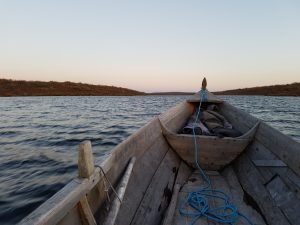 I guess owning the land that Piera used would have given him greater freedom, but it would have costed him a lot to buy the entire property of his meahcci. We are talking about a meahcci covering large areas. I am not sure that Piera would have liked that kind of ownership to the land. The important thing is that the County Administration of Finnmark and FeFo understand the needs and ways of the people who live and care for the nature and people of the tundra. As I mentioned in the methodology chapter (chapter 3), there is much to investigate in the space between authority and caring (Joks & Law, 2017b; Verran, 1998, 2013). The what, whom and how to care also needs to consider incorporating the where, because if you enter Piera’s kitchen as an official you are under the care of Piera. He offers homemade coffee and waffles with locally picked cloudberries to policemen and other officials passing by. Does Piera do this to gain something from the officials? No, this is not how the system of verddevuohta function. You do not “go overboard” in caring. Coffee and something to eat is the least you offer someone passing by. And there needs to be some laws and regulations to the practices of others passing by as they might not care about this area and depend upon it as much as Piera and his family do. The question is how we mediate between the TEK/LEK and official management. In this way of being, Piera has the possibility to tell the officials exactly what he thinks if he feels that something is wrong and unjust. This is respected by the experienced officer that does not feel insulted because he knows that “this is the way things are around here”. It comes through years of experience and mutual respect for each other’s ways and beings. The power is hence balanced through these quiet encounters with respectful conversations, storytelling and laughter over coffee and waffles with local cloudberries. A policeman I know, once told me that this is what becomes the steepest part of learning for fresh officials in Finnmark. Making and preparing this meal gives Piera status as a caring man. His experiences with different types of people passing through also give him a position to mediate between different ways of knowing.
Juohke jávri, juohke jogaš dahje eatnu addá váljit bohtosa ja veahkki máŋgalágan ávkálaš guolis, nu ahte ii nealgo.
Lilienskiolds Speculum Boreales 1701
(Every lake, every stream or river gives so generously of its surplus and helps with so many kinds of useful fish, that hunger might be avoided.)
8.2.3 Caring for traditional ways of knowing
 Life at Vuolit Mollesjohka is all about caring. It is caring for the meahcci and the life that moves within it and through it and caring about how they go together. A host is a caretaker and as a Sámi host you can care by being a verdde. A verdde does not have to be human. It can also be an animal, a river, a landscape, a soundscape, or anything else non-human that you cooperate with trough the verddevuotha system. Believing that everything is connected means that when you take care of something outside your body you also take care of the inside. You feel well and know that taking care make the environments abundant and the surplus will be shared amongst those who are in need. This is the circulation of matter in reciprocal relationships. When Piera provides a golden eagle with fish he had in surplus; he cares for the eagle as a relation on the tundra. At the same time, he knows that the eagle does not eat that much and might leave the reindeer calves unharmed. He has no warranty, but he does his best to facilitate for a preferred result. This is a practise that is not easy to trace the results of. It is so complicated in its nature that a discussion about cause and effect is irrelevant and being replaced by the disposition of powers in natural science (Anjum and Mumford 2010). This means that relations between matter is not a necessity, but a possibility disposed by authority. The sonic skills can be taught to you, but you have the authority to use it and pass it on to your kins.
There are no words in this language to explain how your caring has brought you experience and skills of caring. In the North Sámi language, there are some essential details I noticed when I searched for words describing traditional knowledge, knowledge of traditions, routines and skills. The word árbet means to inherit, the word vierru means routine, custom, habit, and the word diethu means information, knowledge, knowingness and message. By putting them together the word árbevierrudiethu describes a knowledge of traditions. I guess this is the type of knowledge Rudie (1994) described as inscribed. It is knowledge that is transferred through written material, a recipe trying to explain Sámi ways of knowing, like TEK (Joks & Law, 2017b). If we pick out the routine, custom and habit from the word, you have the word árbediethu when talking about traditional knowledge. As I understand it, this is locally customised knowledge being brought to you from birth (eapmi) from your relatives, your herd (eallu). When you have lived and practiced that knowledge through your particular way of living (eallinvuohki), it becomes báikediethu, like LEK (Kramvig, 2005; Law & Joks, 2017). Taking a position where tacit knowledge is not valued because it is not skilled enough is like acknowledging the first ornithologists that presented birdsongs using pictures. If you had not heard the song before, it would give you very little information, but it does not mean that the bird’s song did not exist. Having respect for those things that you are not able to experience is important in an indigenous context. That is why sonic skills are so important in this context.
I tell them about the discussion Piera, and I had about Verdde tourism and ask if they think that would have been a good idea. Everyone except one agrees about the idea.
You know that from this year Piera could have bought hunting licenses from FeFo for his customers, but he didn’t realise it before it was too late. Being a non-native to Finnmark I must wait before I can buy my hunting license for the Tundra. Then, I have to line up for registration to a specific area. Often, all the good spaces are sold out to people from Finnmark. If Piera is the one to decide who’s to hunt and who’s not to, I would have to stay friends with him on a condition that he would provide me with a license. That would do something to our friendship – it would be conditional. What if he decided not to apply for licenses or got licenses that he decided not to use? He doesn’t even like ptarmigan hunting. He could suddenly have a governing role in this. I am Norwegian and so are people in Finnmark. Why does it matter where we come from within this country?
Piera is in the kitchen making waffles. I don’t know how to respond to this without having more information about the regulation. The other guys are silent first, and then they change the subject.
Piera will have access to apply for hunting licences next season. It is not possible to predict how this will turn out. I can relate to the worries about how it will turn out and how it will affect the power relation between the friendship between the host and his guests. I also understand the argument about not having equal rights within the same country but then again have we ever? In the south of Norway much more land is on private hands. The FeFo property is a shared common trying to respect common needs and the ability to live together. It could have been divided and sold, but then everyone would have lost some of their access to something. It is a matter of how you think access should be divided and provided. Other ways of being and doing in Norway differ a lot from this political perspective.
8.2.6 Caring for verddes
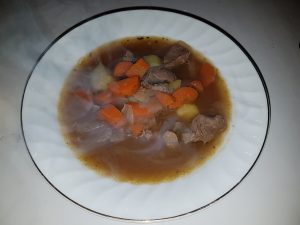 Østmo (2013) refers to conversations with people all over Sápmi expressing a strong wish that “most” of their Sámi knowledge and understanding nature should be widely mediated. The word “most” is telling us you do not disclose details about your meahcci should it destroy your own potential to live, like where the cloudberries and the best fishing grounds are. It also concerns the right to use, or more specifically misuse Sámi practices for economic gain in an inauthentic and disrespectful manner. The verddevuotha system give an opportunity to host and gain respect for traditional ways of knowing. Piera has local access not only to knowledge but also resources like fish, berries and reindeer meat. He provides his guests with what he harvests from his meahcci. The guests who have visited the lodge for years know the cooking skills of Piera. He has hosted famous chefs like Arne Brimi, who wanted to learn how to hunt and prepare reindeer in a traditional Sámi manner. When you kill an animal, you care for it to become properly consumed and part of the life cycle. You use as much of the animal as you can, not only the meat, but also the marrow in the bones, the bones themselves, the tendons, the skin and the fur. Very little is left unused and the leftover entrails are fed to the birds. You eat what you need to get through the season of hunting, fishing and gathering. The rest of the food is preserved by smoking, drying and freezing. Exchanging local products was initial of the verddevuohta system. With all the restrictions on hunting, fishing and gathering, Piera offers people to come along as he does his daily harvesting.
For outsiders to breach the divide between nature and culture and for indigenous people to their knowledge, “small-scale techniques” must be added practically and experimentally to the specific situation. Attentive listening could be such a technique. The challenge comes when you bring tourists into this picture. Does all tourists care? What can be done to make careful encounters in tourism? How do we bring together different ways of caring and enlighten those who don’t care, to “go on well together practically in difference” (Verran, 1998, 2013)? We need to use unusual and unknown methods and encourage ourselves to know the reality of the world in new ways by thinking, performing, practising and relating. These are the methods of our body (Law, 2004). Through “private emotions” and “techniques of deliberate imprecisions” we open up “to [a] world of sensibilities, passions, intuitions, fears and betrayals” (Law, 2004, p. 3). Care is actively seeking to improve life, and Piera’s Verdde tourism provides this. To be able to care, one is dependent upon being attuned attentively and adaptable to tinkering through an embodied engagement with the world. This involves embodied practices, not only as a domain of salvage but more important as modes, styles and ways of working in a logic of care (Mol et al., 2010). Verddes also care for Piera and some of them want to contribute by helping with chores like setting the table and carry wood. Piera lets them contribute and this reinforces the relationship between him and his guests. The guests I met also know Piera’s family as they have also helped around the lodge for years. Piera’s wife has an additional job in Karasjok, and the youngest two children are still at school. They all contribute whenever possible. In this informal way conversation is a necessary tool and listening to more than speaking also becomes a skill of the trained host.
I have tried to zoom in on this challenge by dividing the chapters into categories of hearing, listening, living and caring because I wanted you to notice the difference and how it enhances the sonic skills that are necessary to give good care, in this case through hosting the lodge. Visitors and guests just passing by hear the soundscape of Vuolit Mollešjohka. Relatives, verddes and friends that have connected to the place have learned to listen and be guided by sounds. Family that have lived and are living at Vuolit Mollešjohka are embedded in the soundscape through their bodies. Even though this differ, they are part of it; not living at, in or with the land- and soundscape – they are Vuolit Mollešjohka. This makes the lodge more than a place to stay and it is not possible to compete with such a nicely woven fabric of TEK and LEK of soundscapes in relation to caring. This is a valued skill in some professions, such as nursing, medicine, mechanics, engineering, and ornithology (Bijsterveld, 2019b).
Caring is a way of life at Vuolit Mollešjohka and gives respect to the family that hosts the Duottarstophu in a way that goes deeper than ordinary host-guest relationships. This forms the basis of their new tourism concept, Verdde tourism. Being in the middle of the tundra, they have to start caring for guests long before they arrive at the lodge. Some of the verddes, they keep in contact with the entire year and visit them from time to time. It is a reciprocal relationship and sound contributes to the dynamics of perspectives from what is visible and what is not. The senses are central to the relationship between power and caring as they are transformed through practices (Remme, 2014). Practising jávredikšun to everything human or non-human passing through the meahcci is essential to verdde tourism and it is the way things are done at Vuolit Mollešjohka Duottarstophu in affiliation with traditional and localised knowledge. The soundscape of Vuolit Mollešjohka is a world of many worlds. The knowledge developed here is the property of Piera and his family and cannot be moved from this place without losing part of its validity. This is important in developing the reputation of Verdde tourism at Vuolit Mollešjohka Duottarstophu as a forceful contributor of decolonisation of Sápmi through Sámi tourism.