Washington, D.C.: Chocolate City (travelog entry 6)

It’s not ginormous like everything else
Egon was stunned at how small the White House is. Kind of like my reaction the time I saw Mick Jagger at the bar at the Black Cat (which we also visited on this trip). The White House isn’t really small, for a house; it is a lot more impressive than Number 10 Downing Street, but less so than the Royal Palace in Oslo. Fortunately the Washington Monument and the Capitol lived up to expectations. The Washington Monument is closed for earthquake repairs (yes, there was an earthquake in DC in August!) but we admired it from outside. Egon was suitably impressed and we got a good metal album cover picture of him standing in front of it.
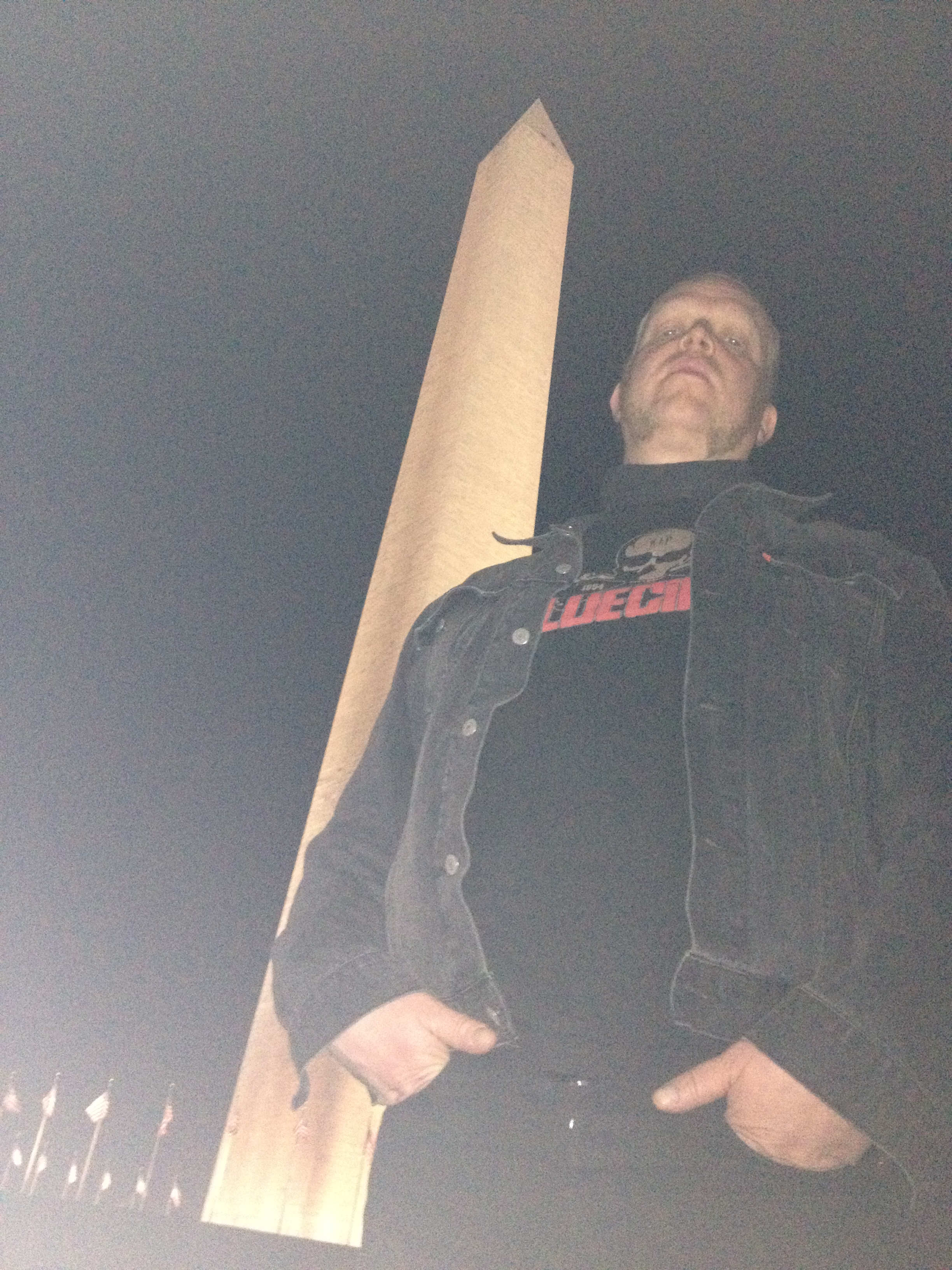
It’s ginormous!
We had dinner at Olazzo in Silver Spring with my mother. It’s a tiny place half filled with a bar, with great cocktails and delicious Italian food. The service, though, is what you might call uneven. The staff are friendly and cheerful when you interact with them but they can to be inattentive and sometimes seem incompetent. After we paid and left, Egon expressed his bafflement. Why on earth, he demanded to know, did we leave just as big a tip at that place where we got terrible service as we did at the crab restaurant in Baltimore, where we got great service? A 20% tip seems absurd to anyone from outside the US even under good circumstances, and it seems like only a chump would pay that much when the service is poor.
Ah, said I, adopting the serene visage of the sage teacher. I had already told him about how service employees get subminimum wage because they’re expected to make up their salary in tips. So now I gave him the whole schpiel about how tips are shared among all the staff. Everybody from the bartender to the busboy gets a cut. So you’re not really tipping just for the waitstaff’s performance. Just like you can’t decide which expenditures you want your tax dollars to go to (“I’ll pay my taxes as long my money gets used only for social services and not for war”), you can’t decide who’s getting what out of the tip you leave. This doesn’t mean that all the waitpeople get the same amount — if one person gets a few big tables in the course of an evening, or some big tippers, or has faster turnover, then that person might make a lot more than another, but some substantial percentages of the take will go to other people behind the scenes.
But then I told him the real reason that quality of service has become so disconnected from the amount of the tip. It’s because that day that you finally work yourself up over the crappy service and decide that you’ve finally had enough and that you’re going to teach them all a lesson and stiff them, and you storm out, you will realize a little while later that you lost your car keys there and you have to ask the staff to help you find them. Basically, Americans believe that tipping gives you karma and if you undertip you will have bad karma. Then bad things will happen to you like losing expensive sunglasses or not finding a parking space or having the cook spit in your food. When you’re trying to decide between a stingy 15% and a generous 20% on a $100 restaurant tab, the difference is just about 27 kroner (the tip, of course, is calculated on the pre-tax total). Why risk bad karma over thirty kroner?
Or maybe I’m just a chump. When we were out past closing at 14th and U St. and swarms of people were crowding all the street corners flagging down cabs, the cabs didn’t want to take us home because we were living in a distant part of town and the long drive back would cause them to miss fares in the teeming nightclub area. So when an honest taxi driver finally came to our rescue very late at night, I gave him a $10 tip on the $18 fare, which is actually over 55%.
In the busier restaurants in big cities like New York and DC, there are a lot of employees with specialized tasks. I never realized how confusing it must be until I watched Egon misread the signs. First, let me make the context clear. This is a guy with extraordinary social and cultural intelligence and grace, somebody who always comes across as the perfect gentleman in Norway, and who is well-travelled besides. He’s been all over Europe including many trips to England and long trips to Germany and South Africa. He’s no country bumpkin. But there was something about the way I was reading the employee roles at the restaurants that was completely lost on him.
For instance, in the beginning Egon would order drinks from the greeter who seated us. This would irritate the greeter who would send the waitperson over to take our orders. I had to explain that the greeter’s job is to organize seating, not to take orders. Also, sometimes somebody other than our waiter would deliver food to the table, which is something waitstaff do for each other when the restaurant is busy so that the food gets delivered hot, other times it’s somebody from the kitchen. But waitpeople like to keep their tables straight and so if you want something you’re supposed to find “your” waiter (because despite my idealization above there *is* some correlation between service and tips). Egon seemed pretty much oblivious to this and would order another side dish or another drink from whoever appeared at our table. At the end of the meal, Egon would thank the guy clearing our plates for the excellent meal. I had to explain that busboys don’t actually care whether you liked your meal and in the specific case at hand didn’t speak English.
